Bar With Private Room Tips for Smooth Guest Management
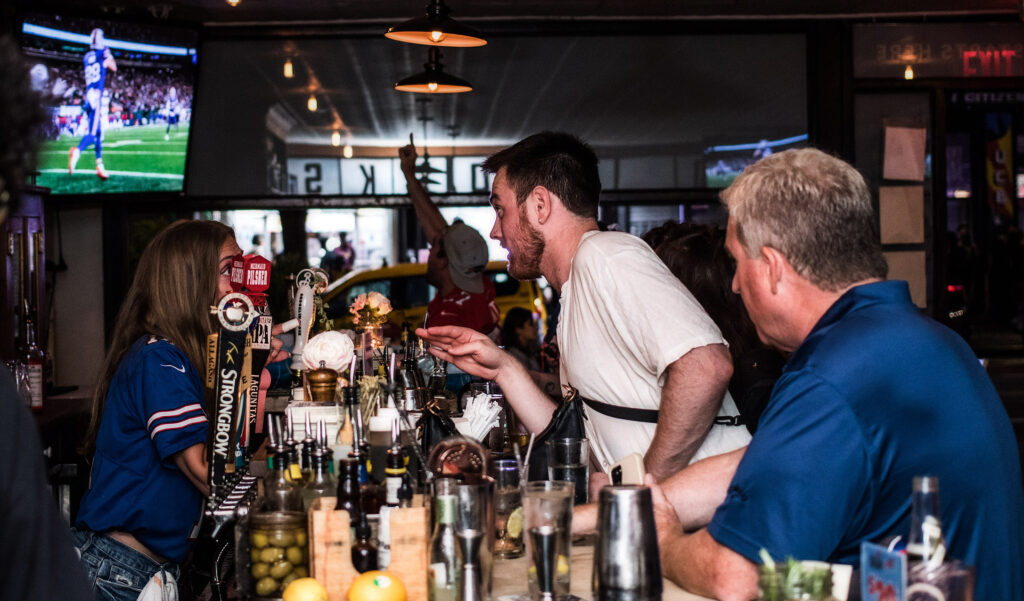
A busy bar can absorb a surprising amount of unpredictability. A bar with a private room cannot. The moment you add a semi-contained space, guest management stops being only about drinks, speed, and atmosphere. It becomes a balancing act between privacy and service, between energy in the main bar and expectations behind a closed door, between hosts who want freedom and staff who need structure.
That tension is exactly why private-room events can be so profitable and so fragile at the same time. When they run well, the room feels effortless. Guests arrive in a staggered wave, drinks land quickly, the host feels looked after, and the main floor barely notices the extra demand. When they run poorly, every small miss compounds. One delayed tab can hold up a round for twenty people. One unclear food timing can turn a birthday booking into a complaint. One overpacked room can affect not only the event, but the service standards of the whole venue.
The managers who handle this well rarely rely on charm alone. They work from systems, habits, and small operational decisions that protect both the guest experience and the team on shift.
The private room changes the guest journey
People behave differently in a private room than they do at standard bar tables. In the main space, guests expect some friction. They know they may queue at the bar, wait a few minutes for cocktails, or need to compete with general noise. In a private room, expectations shift upward immediately. Guests read privacy as premium, even when the spend minimum is modest.
That means service gaps feel larger. A ten-minute wait for drinks in the main bar may be tolerable on a Friday night. In a private room, the same wait can feel like neglect, especially if the host promised a polished experience to clients, family, or colleagues.
This is why guest management begins long before the event starts. A private-room booking is not just a reservation with four walls. It is a separate service environment with its own flow, its own pressure points, and often its own politics. You may be dealing with a birthday host who wants a relaxed evening, a company organizer who needs invoices split three ways, or a group of friends who say they want casual drinks but actually expect nightclub energy by 10 p.m.
The first job is to understand which version of the night the guest thinks they have booked.
Start with the host, not the room
Many venues make the mistake of focusing on room capacity, minimum spend, and package options before they understand the host. Those details matter, but they are not the real source of smooth service. The host’s expectations, communication style, and authority within the group matter more.
A host who is organized but undecided can usually be guided. A host who is vague and highly particular is riskier, even if the group size is small. In practice, the most useful early questions are often simple. Are they expecting seated service or bar service? Will one person be making decisions on the night? Are speeches, cake, gifts, or presentations involved? Are there guests arriving much later than the main group? Is the room meant to feel tucked away and intimate, or do they want people drifting in and out from the public bar?
Each answer changes staffing and layout. A room booked for after-work drinks with thirty people who rotate in over two hours needs different management from a private engagement party where the first fifteen minutes set the tone for the whole evening.
Experienced event managers often learn to listen for what is not being said. If a guest says, “We want it easy and informal,” but then asks detailed questions about reserved seating, playlist control, dietary handling, and exact prosecco chilling, they do not actually want informal. They want ease without visible effort. That is achievable, but only if the venue plans for it.
Capacity is not just a fire number
Every bar with a private room has a legal or practical capacity. That number is a starting point, not a booking target. Smooth guest management depends on working capacity, which is lower once you account for furniture, service access, standing drink space, buffet setup, AV equipment, and guest behavior.
A room that can legally hold forty people may feel excellent with twenty-eight for a networking event, strained with thirty-two for a birthday, and impossible with forty if everyone arrives at once wearing winter coats and heading straight for the drinks table.
The trap is obvious. Sales teams and managers are tempted to maximize covers or commit to the largest number the room can technically hold. On paper, that looks efficient. On the floor, it creates blocked doorways, slow tray movement, poor sightlines, and a room that heats up too quickly. Guests do not remember the legal occupancy figure. They remember whether they could comfortably talk, move, and get a drink.
A useful rule in practice is to build service around peak occupancy, not average attendance. If a group says thirty guests and you know from experience that birthdays often swell late, plan for thirty-five bodies moving through the room. If a corporate booking says forty with an RSVP list, ask how many are likely to attend for the first hour, because arrival compression matters more than total duration.
Arrival management sets the tone
If there is one phase that predicts the rest of the event, it is the first twenty minutes. Guests form their opinion quickly. Is the room ready, is somebody clearly responsible, is there a drinks plan, and do they know where to go?
A private room should never feel like an afterthought. The easiest way to create that impression is to leave guests waiting in the public bar while staff work out keys, tabs, glassware, or access. Even when there is a minor delay, perception improves dramatically if one team member owns the handoff and speaks with certainty.
Hosts especially need clear anchoring. They should know who their contact is on the night, how orders will be handled, where coats or gifts can go if relevant, and what the agreed timing is for food or any special moments. When the host feels steady, the group usually follows.
This is also where physical setup matters more than many operators admit. If the first thing guests see is dirty glassware from a prior booking, stacked chairs, or a room with no obvious focal point, confidence drops. A private room does not have to look expensive, but it must look intentional.
Decide early who owns the room
One of the classic mistakes in a bar with a private room is shared-but-undefined responsibility. The floor staff assume the bartender is watching the group. The bartender assumes a server is checking the room. A manager drops in occasionally, but no one is consistently reading the table, spotting low stock, or answering the host’s questions.
That gap creates preventable friction. A private room works best when one person is visibly accountable, even if multiple staff support the event. This person does not need to stand inside the room all night, but they need to know what is happening there at all times.
The host should never wonder whom to ask. Staff should never debate basic decisions in front of guests. When one person owns the room, even a busy operation feels coordinated.
This matters even more during dual-pressure periods, such as 7 p.m. To 9 p.m. On Fridays, when the main bar is slammed and private groups expect dedicated attention. Without clear ownership, the room becomes a service black hole. Orders disappear into the crowd, used glasses accumulate, and the host starts walking to the bar to chase updates. That is the moment a premium booking starts feeling self-service.
Build a drinks system guests can understand
Many service problems are really ordering problems. Guests are usually patient when a system is clear, and impatient when it is opaque. A private room can run smoothly with bar tabs, wristbands, hosted packages, tray service, or a hybrid model, but the rules must be obvious from the start.
Confusion often comes from trying to be too flexible. A host says they may cover “a few drinks,” staff interpret that differently across the shift, and suddenly some guests are being charged while others are not. Or a venue allows both room service and bar ordering without clarifying priorities, so guests place duplicate orders through different channels.
Clarity beats generosity here. If drinks are going on one tab until a certain spend limit, say so. If cocktails may take longer than beer and wine during peak https://maps.app.goo.gl/4GnHat7jvfaKZjtm8 periods, tell the host early. If table service will be strongest in the first hour and then shift to bar ordering, frame that as part of the plan, not as a retreat from service.
A short briefing to the host can prevent half the friction of the night. Good operators do this almost casually, but it is deliberate. They explain how orders will be taken, how additions to the tab will be approved, and who can authorize changes. That does not make the experience feel rigid. It makes it feel managed.
Food timing is where many events unravel
Drinks get most of the attention in a bar setting, but food timing often determines whether guests feel cared for. In a private room, this can be tricky because food serves multiple roles. It may be a social anchor, a spend driver, a way to slow intoxication, or simply a host’s insurance policy against complaints.
The most common issue is vague timing. Guests say “some sharing food later,” but later means different things to different people. For a birthday group arriving at 7 p.m., later might mean 8 p.m. For a corporate mixer with speeches, it might mean after the formal remarks. If the kitchen fires items without a clear cue, the room can lose momentum. If service waits too long, hungry guests start free-ordering fries and sides, which complicates tabs and strains the pass.
Experienced teams pin this down early and confirm it again on arrival. Not aggressively, just professionally. “Would you like food out thirty minutes after most guests arrive, or after the speeches?” That single question has saved many evenings.
Room style matters too. Passed canapés encourage movement and conversation, but require active staffing and can leave quieter guests under-served. Grazing tables look abundant and reduce order complexity, but consume space and can get messy fast. Plated items create structure, yet they slow informal events if guests were expecting fluid movement. There is no universal best choice. The right one depends on guest behavior and room shape as much as budget.
Noise, spillover, and the edge of privacy
A private room is rarely fully private in practice. Sound travels, guests wander, doors open, and music from the main bar shifts through the night. That is normal, but it needs management.
If the room is too sealed off, guests can feel forgotten. If it is too porous, they feel misled. The sweet spot is controlled permeability. Guests should feel they have their own zone without becoming detached from the venue.
This has practical implications. Keep an eye on how often people are leaving the room to order, smoke, take calls, or pull in extra friends. That movement affects headcount, security, and service demand. It also changes the character of the booking. A quiet dinner may turn into a larger standing drinks party if the host starts inviting bar guests inside.
This is where policy and discretion need to work together. The venue should have clear rules on maximum numbers and access, but staff must apply them with calm judgment. Publicly correcting a host in front of their guests can sour the room. Quietly speaking to the organizer before it becomes a safety issue is almost always the better move.
Train staff for private-room psychology, not just procedure
A private room magnifies staff behavior. Guests notice confidence, hesitation, and tone far more in a contained space than at the main bar. A server entering the room does not just deliver drinks. They interrupt, influence mood, and signal how organized the venue is.
That is why private-room service should be treated as a distinct skill. The strongest staff for these bookings are not always the fastest runners or the most extroverted bartenders. They are often the people who read a room well, handle hosts smoothly, and know when to be present versus invisible.
A few habits make a disproportionate difference:
- Enter with purpose. Guests should feel that staff know why they are there, whether to clear, check the host, or deliver a round.
- Confirm quietly, especially around tabs and add-ons. Nothing destabilizes a host faster than a public billing dispute.
- Watch the edges of the room. The people nearest the door, the food station, or the least comfortable seating often reveal issues first.
- Reset constantly. Empty glasses, napkins, and abandoned chairs make a private room feel unmanaged within minutes.
- Read the social tempo. Some groups want quick touchpoints. Others want privacy and only a light service footprint.
That last point is easy to underestimate. Over-servicing can be almost as disruptive as under-servicing. During a work event, repeated interruptions can break conversation flow. During a family gathering, hovering can feel intrusive. Strong staff learn to absorb cues quickly and adjust.
Billing should never become the final drama
The end of the night often exposes every weak spot in the event setup. Tabs that were loosely defined at the start become contested. Guests order final rounds just as the host thinks the package has ended. Someone assumes service charge is included. Someone else needs a VAT invoice, or wants to split costs after the fact.
All of this is manageable if the billing method is locked in clearly before the room gets busy. The key is to remove ambiguity while preserving hospitality. A host should not feel they are being pushed into bureaucracy, but they should understand exactly what happens when spend limits are reached, how extensions are approved, and what time the room closes relative to the venue.
One of the most useful habits is a mid-event financial check-in. Not a hard sell, not an awkward interruption. Just a timely update when the booking is around two-thirds through its expected spend or duration. That gives the host options while they still have room to decide. They can add more food, cap the tab, switch new orders to individual payment, or extend the booking if the venue can accommodate it.
Without that check-in, staff often save the conversation for the end, when guests are tired, the host may be distracted, and everyone wants a quick exit. That is when minor surprises become major annoyances.
The main bar still needs protection
Private-room success should not come at the expense of the rest of the venue. This sounds obvious, but it is where many operations quietly lose money and reputation. A high-spend room can pull disproportionate labor and attention away from regular trade, especially if the event is underscoped.
The signs show up quickly. Ticket times slow across the main floor. Glass collection falls behind. Walk-in guests wait too long to order. The room may be happy, but the rest of the bar is not, and those guests may never know there was a private event draining the system.
The only fix is honest resource planning. If a room needs dedicated support, schedule it. If cocktail complexity in the room will overwhelm the bar printer during peak service, simplify the offering or pre-batch key items. If food orders from the room will collide with a known kitchen rush, build the timing around that reality instead of pretending the pass can absorb anything.
A well-run bar with a private room does not rely on heroic staff improvisation. It shapes the booking to fit the operation.
Common trouble spots that deserve early attention
Most guest issues in private rooms are repetitive. They feel unique in the moment, but patterns emerge quickly if you review enough bookings. The best teams design around those patterns before they become service failures.
Watch closely for these pressure points:
| Trouble spot | What usually causes it | Better approach | | --- | --- | --- | | Late guest surge | Host underestimates arrivals after dinner or after work | Hold some standing space and glassware in reserve | | Tab confusion | Vague agreement on hosted drinks | Confirm the exact rule with the host on arrival | | Room feels neglected | No clearly assigned staff lead | Make one person visibly responsible | | Noise complaints | Door left open, music mismatch, spillover into public bar | Recheck sound balance as the room fills | | Messy closeout | Billing discussed too late | Give a spend update before the final hour |
None of these fixes are glamorous. That is the point. Smooth guest management is usually built from ordinary discipline rather than dramatic intervention.
Read the event type, not just the booking note
A room booked for twenty can behave like three completely different events depending on context. A team social after a hard quarter often starts restrained and loosens rapidly. A family celebration may have an intense first hour of greetings, then settle into clusters. A client event can feel formal until the key stakeholder leaves, then turn into a casual drinking session.
If you treat all private-room bookings the same, service becomes either too stiff or too loose. Better judgment comes from reading the event as it unfolds. Is the host circulating or staying planted? Are guests ordering premium spirits or playing safe with wine? Is the room using every seat, or are people standing because they want movement? Are guests asking logistical questions, or have they relaxed into the space?
Those details tell you what kind of support the room needs next. Sometimes the right move is to increase presence and offer another food round. Sometimes it is to pull back, clear quietly, and let the evening breathe.
Private rooms reward subtle management. The team does not need to dominate the experience. It needs to make the right intervention at the right moment.
Aftercare matters more than many venues think
Guest management does not end at the last order. The departure phase shapes memory. If coats are chaotic, forgotten items go missing, rideshares are disorganized, or guests are abruptly rushed out, the final impression can undo a lot of good work.
A clean close feels controlled, not cold. The host knows where they stand on the bill. Guests are not left milling in confusion. The room exits into the venue or the street with some dignity intact.
For repeat business, follow-up matters too. The strongest operators note what actually happened, not just what was booked. Final headcount, peak ordering window, spend pattern, service issues, and host preferences all become valuable on the next inquiry. Over time, that knowledge makes future bookings smoother and more profitable.
That is one of the quiet advantages of running a bar with a private room well. You do not simply earn one successful event. You build a reputation for making complex social situations feel easy. Hosts remember that. So do corporate organizers, assistants, and the friend in every group who always ends up planning the next one.
Smooth guest management is never accidental. It comes from understanding that privacy raises expectations, that ambiguity creates friction, and that small operational choices shape the entire evening. A great private room is not defined by the walls around it. It is defined by how confidently the venue manages what happens inside them.
The Winslow
Address: 243 E 14th St, New York, NY 10003
Phone number: +12127777717
FAQ About Bar With Private Room
Which bars in NYC offer private rooms?
Many bars in New York City offer private and semi-private rooms for parties and events, ranging from hidden basement speakeasies to upscale lounge spaces. Top options include The Back Room on the Lower East Side, Dear Irving Gramercy, Pebble Bar in Midtown, Mister Paradise in the East Village, and The Winslow in the East Village.
What is a private room in a pub called?
A small, private seating area or partitioned booth in a traditional pub is most commonly called a snug. Larger private rooms used for events, parties, or dining are typically referred to as private dining rooms, function rooms, or back rooms.
How much does a 2 hour open bar cost?
A 2-hour open bar generally costs between $15 and $45 per person, depending heavily on the quality of alcohol you choose. For a standard group of 100 guests, this translates to an overall cost of $1,500 to $4,500 before taxes, setups, and staff gratuities.